
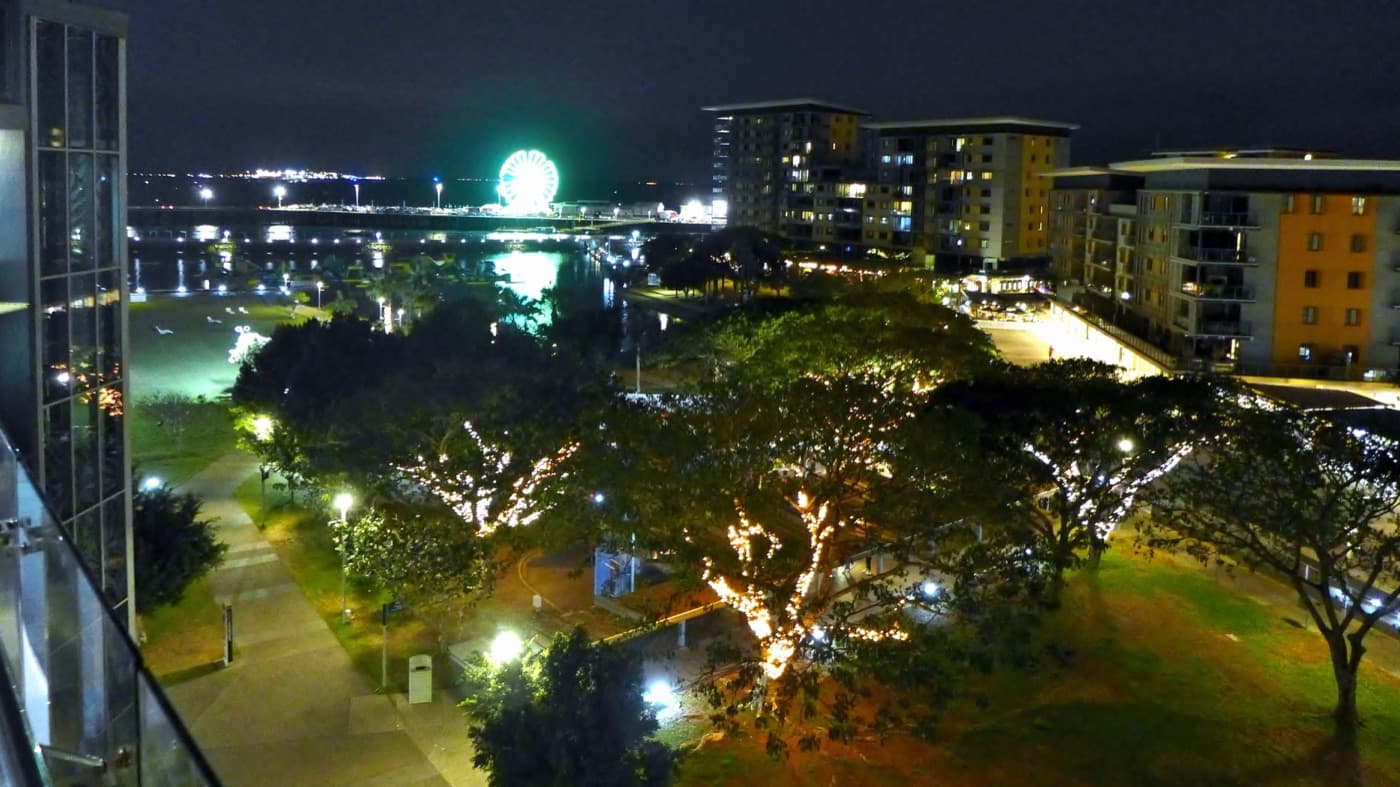
Darwin can be a genuinely good place to work — if you go for the right reasons, at the right time, with a plan. Fly north because a hostel rumour said "they're desperate for staff" and you can burn a week's wages before you even start.
This is not Sydney, Melbourne or Brisbane with extra humidity. Darwin is a small tropical capital at the top of the country. The job market is real, but it is also smaller. Hospo and hotels keep the city moving. Construction, warehouses, the port and cleaning fill in the rest. Beyond town, the Top End opens up: tourism, stations, camps and the kind of remote work you will not find on a Melbourne tram line.
People who do well here usually arrive with a few applications already in, a bed booked for the first week, and a clear idea of whether they want CBD shifts or something further out. People who struggle often treat Darwin like a guaranteed hiring machine. It isn't.
Where is Darwin?
Capital of the Northern Territory. Northern coast. Top End. If you landed in Sydney or Brisbane first, Darwin is not a cheap overnight bus — most people fly, and the ticket is part of the decision.
It is also the usual jumping-off point for Kakadu, Litchfield and Katherine. Tourism NT's Nature's Way itinerary puts Kakadu at around 250 km / about 3 hours, Katherine around 317 km / about 3.5 hours down the Stuart Highway, and Litchfield roughly 1.5 hours south depending on which waterfall you are aiming for.
Greyhound does run south through Katherine and Alice Springs toward Adelaide. That is a long-distance outback coach, not a casual weekend hop. Once you are in Darwin, you are in Darwin.
That distance is why a Facebook comment is a terrible reason to book the flight. Check vacancies and a first week of accommodation first. A Dry-season rumour is not a start date.
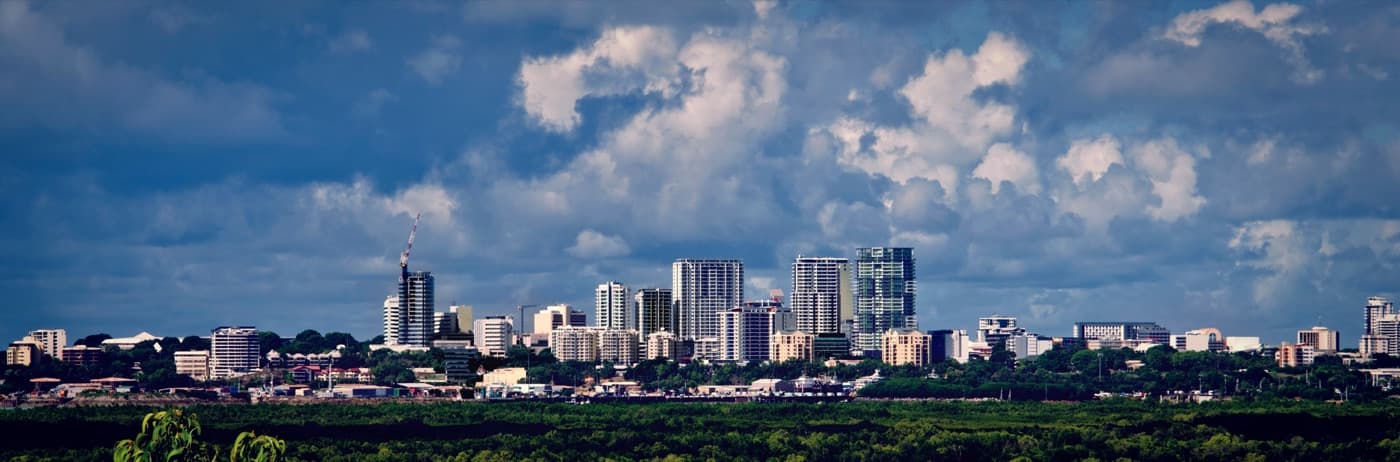
What is Darwin weather actually like?
Forget four European seasons. Darwin runs on two, plus a stretch locals call the build-up — those sticky weeks when the rain has not really arrived yet but the air already has.
Tourism NT puts the Dry at roughly May to October and the Wet at November to April. The Bureau of Meteorology is slightly stricter: dry from 1 May to 30 September, wet from 1 October to 30 April. Either way, the year has a personality. You feel it walking to a shift.
Dry season
This is the Darwin people picture: blue sky, outdoor drinks, markets, festivals, tourists. Humidity drops. Rain almost disappears. Days are still warm — BOM Darwin Airport averages put July maxes around 30.7°C — but nights finally let you sleep. If you want the social scene and the tourism roster, this is the window.
Wet season
Heat, humidity, storms, and January dumping around 432 mm of rain at the airport. Some outdoor tours scale back. Remote roads can close. The city does not shut. Hotels, the port, warehouses, hospitals and plenty of venues keep going. You just sweat more walking between them.
If you have only lived in Melbourne winters, the Wet can be a shock. If you can handle it, you are competing with fewer travellers who timed the "nice weather".
| Period | Weather | Backpacker context |
|---|---|---|
| May–Oct | Dry season — lower humidity, little rain | Stronger tourism period; more outdoor events |
| Nov–Apr | Wet season — hotter, humid, heavy rain and storms | Different tourism patterns; city work still exists |
BOM Darwin Airport long-term averages (site 014015): annual mean max 32.1°C, mean min 23.3°C, about 1,737 mm of rain a year. Useful for packing. Useless as a job forecast.
When is the best time to find work in Darwin?
Here is the trap: the Dry is when Darwin looks busiest. That is not automatically when it is easiest to get hired. Hotels and tour operators often fill Dry-season rosters before the visitors show up. Arrive in mid-July because the weather is perfect and you may be competing with everyone else who had the same idea, for jobs that were advertised in April.
- March–May — A practical window for hospitality, hotels and tourism if you want to be in place before the Dry really hits. Competition still exists, but you are not arriving at the same moment as every other traveller who timed the "best weather".
- June–August — Peak Dry for visitors, events and many outdoor operations. Work can be available, but accommodation is tighter and you will not be the only backpacker looking.
- September–October — Still Dry for much of this stretch, then the build-up. Some tourism roles wind down as the season turns. Around Darwin, mango harvest is often discussed for October–November — short, agricultural, and worth checking as current vacancies rather than assuming it will absorb everyone. See the harvest calendar for broader seasonal farm timing.
- November–February — Wet season. Hospitality does not disappear, but some tourism-linked roles shrink. Construction, logistics, cleaning, facilities and year-round hotels can still advertise. The climate is the bigger filter: not everyone wants to job-hunt in high humidity.
Construction and logistics do not follow the tourist calendar as neatly as hotels and tours. A warehouse or site role can appear in the Wet. A boat-tourism job is more likely to track visitor numbers and weather.
A packed Waterfront on a Saturday is not a vacancy board. Check live ads and ask when the role actually starts.
What kind of jobs can backpackers find in Darwin?
Broader than a farm town. Smaller than Brisbane. You are not stuck picking one industry — but you also cannot assume there will be 40 café jobs waiting on Mitchell Street.
Hospitality
Common ads include:
- Waiter / waitress
- Bartender
- Barista
- Kitchen hand
- Chef / cook
- Food and beverage attendant
- Restaurant and café staff
If you will sell or serve alcohol, NT Government rules require a valid RSA. Staff generally need to complete recognised RSA training (currently SITHFAB021) within seven days of starting at a licensed venue. An interstate RSA from an accredited provider can be accepted, but NT refreshers apply. Check the job ad before you pay for a course.
Hotels and accommodation
Typical roles:
- Housekeeping / room attendant
- Reception
- Kitchen and F&B
- Maintenance
- Portering / guest services
Hotels are one of Darwin's more consistent employers because the city has year-round business travel as well as leisure tourism. That does not mean every property is hiring next week.
Tourism
You may see:
- Tour support and bookings
- Visitor services
- Boat / harbour operations support
- Customer service attached to tourism businesses
- Hospitality inside tourism venues
Specialised guiding is not an unskilled walk-in job. Many guiding roles need qualifications, local knowledge, first aid and sometimes commercial licences. Do not assume a Kakadu or harbour tour ad is open to someone with no relevant tickets.
Construction
Examples:
- Labourers
- Trades assistants
- Site support
- Skilled trades
Construction work in the NT generally requires a White Card (general construction induction). NT Government currently requires face-to-face training through an approved RTO, then an application for the card. Read our Construction Jobs in Australia for Working Holiday Makers guide before paying for tickets you may not need yet.
Warehousing & logistics
Darwin supplies the Top End. Freight, stores and distribution sit around the port, East Arm, airport-related services and industrial pockets toward Berrimah, Pinelands and Palmerston.
- Warehouse worker
- Picker / packer
- Stores person
- Forklift operator
- Delivery and logistics support
Forklift roles usually need a high-risk work licence. A driver licence helps for deliveries and early starts outside the CBD. Transport to these sites is a bigger issue than it is for Mitchell Street hospitality.
Cleaning
- Commercial cleaning
- Hotel and accommodation cleaning
- Industrial / site cleaning
Mining & remote-resource support
Darwin itself is not simply a "mining town". It can act as a recruitment, logistics and transport base for resource and remote-site operations elsewhere in the NT.
Possible support categories:
- Utility and camp support
- Catering
- Housekeeping
- Trades assistants
- Logistics
- Maintenance and site-support roles
Remote-site work is a different decision from a CBD café job: rosters, transport, camp rules and tickets all matter. Start with our Mining Jobs in Australia guide rather than assuming a Darwin listing is an easy FIFO start.
What jobs can I get without much experience?
Realistic examples:
- Kitchen hand
- Housekeeping
- Cleaner
- Labourer
- Warehouse assistant
- Hospitality floor staff
- Hotel worker
- Casual event staff
- Some tourism-support roles
"Entry level" does not mean no certificate, no licence, no interview and immediate employment. A kitchen-hand job can still want RSA if you also work the bar. A labouring job can still want a White Card. A warehouse job can still want you on site at 6am in Pinelands. Apply, but do not treat entry-level as automatic.
What certificates do you need in Darwin?
Do not buy every certificate on the internet before you have a job. Match tickets to the roles you are actually applying for.
RSA
Needed for alcohol-serving roles. NT Government sets the rules, including timing after you start and refresher requirements. Confirm whether your existing certificate is accepted.
White Card
Needed for construction work. In the NT this is not a casual print-at-home extra — check current NT Government / NT WorkSafe requirements.
Forklift licence
Relevant for some warehouse and stores roles. Useless if every ad you are applying for is café work.
Driver licence
Useful for many jobs outside central Darwin, early shifts, and any role that includes driving. Less essential if you live and work in the CBD hospitality strip.
First Aid
Useful for some tourism, hospitality and remote roles. Rarely a reason to delay applying for a kitchen or housekeeping job.
Check actual job advertisements before paying for licences or training.
Do you need a car in Darwin?
It depends on the job, not on Darwin as a slogan. Buslink covers Darwin and Palmerston, but industrial start times and remote work are a different problem from a Mitchell Street dinner shift.
Darwin CBD / hospitality
A car may be less essential if you live near work. Walking, scooters and buses can cover a lot of the inner-city hospitality cluster.
Industrial / warehouse jobs
Transport becomes more important. East Arm, Berrimah, Pinelands and similar areas are not the same commute as the Waterfront. Ask whether the shift starts before buses are useful.
Palmerston
Palmerston sits roughly 20 km south of the Darwin CBD. It is a real residential and industrial satellite, not a tourist suburb. Buslink connects it, but commuting time and late finishes matter if your job is in one place and your bed is in the other.
Farms / regional jobs
A car can dramatically increase options once you leave the city. Horticulture around Darwin and roles advertised as "rural Darwin" are often not on a hostel doorstep.
Kakadu / Katherine / remote work
Confirm transport before you accept. A role in Kakadu or Katherine is not a Darwin commute. Some employers fly, bus or drive staff in; others expect you to get yourself there. Do not find that out after you have already flown north.
Where should backpackers stay in Darwin?
Stay near the work, not near the prettiest sunset. Dry-season beds get tight, so we are not inventing nightly rates — book the first week before you fly.
Darwin CBD / Mitchell Street
The practical first base if you are job-hunting in hospitality. Hostels, bars, restaurants and other backpackers are concentrated here. Good for walking to interviews. Less ideal if your job is a 5:30am warehouse start.
Waterfront
Close to hospitality and a pleasant place to live, but not automatically cheaper. Useful if your work is in the precinct; less useful as a long-term budget strategy.
Stuart Park
Next to the CBD. Walkable or a short bus/scooter hop into town. A common step once you want something quieter than Mitchell Street but still close to city jobs.
Parap
Supermarkets, the Saturday markets, and a more local feel. Still close enough to the city for many hospitality workers. A reasonable share-house zone once you have a job.
Nightcliff
Coastal, popular with people who already have work and want a neighbourhood rather than a party street. Commute into the CBD is longer than Stuart Park. Better once you are settled than as a first-week job-hunt base.
Casuarina
Major shopping and services in Darwin's northern suburbs. Makes sense for retail or northern-suburb shifts. Less convenient if every interview is on Mitchell Street.
Palmerston
Stronger for industrial, warehouse and some facilities work. Weaker as a backpacker social base. Stay here because the job is here — not because it sounds close to Darwin on a map.
Backpacker accommodation in Darwin
The point of a hostel here is establishing yourself while you job-hunt — not collecting a ranking. Book the first week or two before you fly, especially in the Dry.
Youth Shack Backpackers
69 Mitchell Street. A central Darwin hostel with dorms and private rooms, on-site bar and a social setup that suits people who have just arrived and need to meet other travellers while they apply for work. Walking distance to a lot of CBD hospitality.
MOM Darwin
52 Mitchell Street (formerly Melaleuca on Mitchell / Darwin YHA). Large backpacker property in the same strip, with shared and private rooms. Same advantage: you are in the job-hunting neighbourhood, not 40 minutes out in a quiet suburb with no network.
Share houses
Once you have work, a share house in Stuart Park, Parap or similar usually makes more sense than paying hostel rates for months. Rooms often move by word of mouth. Hostel noticeboards and coworkers are more useful than arriving and hoping Facebook will solve it on day one.
Can you find jobs with accommodation in Darwin?
Sometimes — but it is more common in remote tourism, resorts, roadhouses, stations, remote hospitality and certain regional employers than in a standard Darwin CBD café job.
City hospitality usually expects you to find your own place. A Kakadu lodge, a station, or a roadhouse on the Stuart Highway is a different product: the bed may be part of the deal, and so may the isolation.
Ask, in writing if you can:
- Is accommodation provided?
- Is it free or deducted from wages?
- What does it cost?
- Is transport included?
- Is the accommodation tied to employment?
- What happens if employment ends?
Those questions matter even more once you look beyond Darwin — Katherine, Kakadu, stations and Red Centre tourism all use live-in arrangements more often than the CBD.
How to find a job in Darwin
1. Search current vacancies before arriving
Do this first. A Darwin listing with a start date beats a rumour from someone who was here two Dry seasons ago.
2. Apply directly to hotels and hospitality employers
Hotel career pages and venue websites still matter. Walk-ins can work in hospitality once you are in town, but they work better if you already have RSA, availability and a CV that is not on your phone in a dying battery.
3. Search tourism operators
Harbour cruises, day tours, visitor attractions and booking desks. Seasonal timing matters more here than in a year-round hotel kitchen.
4. Register with local recruitment / labour-hire companies
Useful for warehousing, cleaning, events and some site support. Read the contract. Labour hire is not automatically bad; unpaid trial shifts and vague "maybe next week" promises are.
5. Search construction and logistics companies
Look at contractors, facilities managers and freight operators — not only "backpacker jobs Darwin" Google results.
6. Search nearby and remote NT jobs
A role advertised as "Northern Territory" may not physically be in Darwin. It might be Katherine, Jabiru, a station, a roadhouse or a camp. Read the location line twice.
7. Use your network
Hostels and other backpackers do surface shifts. Verify employment conditions yourself — pay rate, Award, hours, and whether the person recommending it actually worked there.
Employers worth researching
This is not a list of companies that "hire backpackers". It is a list of organisations worth checking for current vacancies because they operate in Darwin across hotels, hospitality, tourism, construction, logistics, marine, airport-related services, facilities and resource-support contracting.
Companies and organisations worth checking for current vacancies include:
- Accor careers — hotel brands operating in Darwin
- Hilton jobs
- Mindil Beach Casino Resort
- NT Government jobs
- Woolworths careers
- Darwin International Airport
- Darwin Port
- Compass Group Australia — catering and site support
- Qantas careers
- Programmed — facilities and maintenance contracting
Always go to the official careers page. A Facebook post claiming someone is hiring is not a contract.
Does working in Darwin count toward your 88 days?
No. Being in Darwin does not magically turn every job into specified work.
It depends on your visa subclass, the actual work, the industry, the location, and the current Home Affairs rules. Your payslip description matters more than the city name on Instagram.
The entire NT is treated as Northern Australia for some specified-work categories. Construction, mining, plant cultivation (including some horticulture such as mango work) and certain other primary-industry roles may qualify when the work and postcode match current criteria. Tourism and hospitality work in Northern Australia can also be relevant for some visa subclasses and instruments — but only if the actual duties and location fit the current definition. A warehouse pick-pack job, a generic retail shift, or office admin is not specified work just because it happens in Darwin 0800.
Check the actual job against current government criteria before you rely on it for a second- or third-year visa.
Use:
- 88-Day Work Guide
- 88-day postcode checker
- 88-day calculator
- Department of Home Affairs — specified work
How much can you earn in Darwin?
There is no honest "typical Darwin backpacker salary". Pay depends on industry, Award, classification, casual versus permanent status, weekends, public holidays, overtime and penalty rates.
Hospitality, cleaning, construction labouring and warehousing sit on different Awards. Casual loading is not a bonus you invent — it is part of the legal minimum for that classification. Before you accept a cash-sounding number, check it.
What is life in Darwin actually like?
Stay a few months and Darwin stops feeling like a stopover. It is a small city that lives outside. In the Dry you finish a shift, walk to the water, and the evening still has something in it. In the build-up you finish a shift and the air feels like a wet towel.
Mitchell Street in peak Dry has a proper backpacker pulse — hostels, bars, people comparing shifts. There is also a much larger Darwin that is not performing for travellers: Asian food as everyday dinner, suburban footy, people who have lived here for years. That mix is one of the better parts of staying.
The catch is isolation. Litchfield is a day trip if you have a car or a tour. Kakadu is a plan, not a lunch break. Friends in Melbourne are a flight, not a weekend drive. If you like the idea of being somewhere that feels like the edge of the country, that is the appeal. If you need a big-city backup job next week, it is the problem.
What can you do on your days off?
This is the part that makes Darwin worth more than a pure farm town. You can work a dinner shift, sleep in, and still be standing under a waterfall before lunch — if you plan it. You can also waste a rostered day off sitting in a hostel because you assumed Kakadu was "just there".
Think in three layers: what you can do after a shift, what you can do on a real day off, and what needs a proper overnight.
After work, no car required
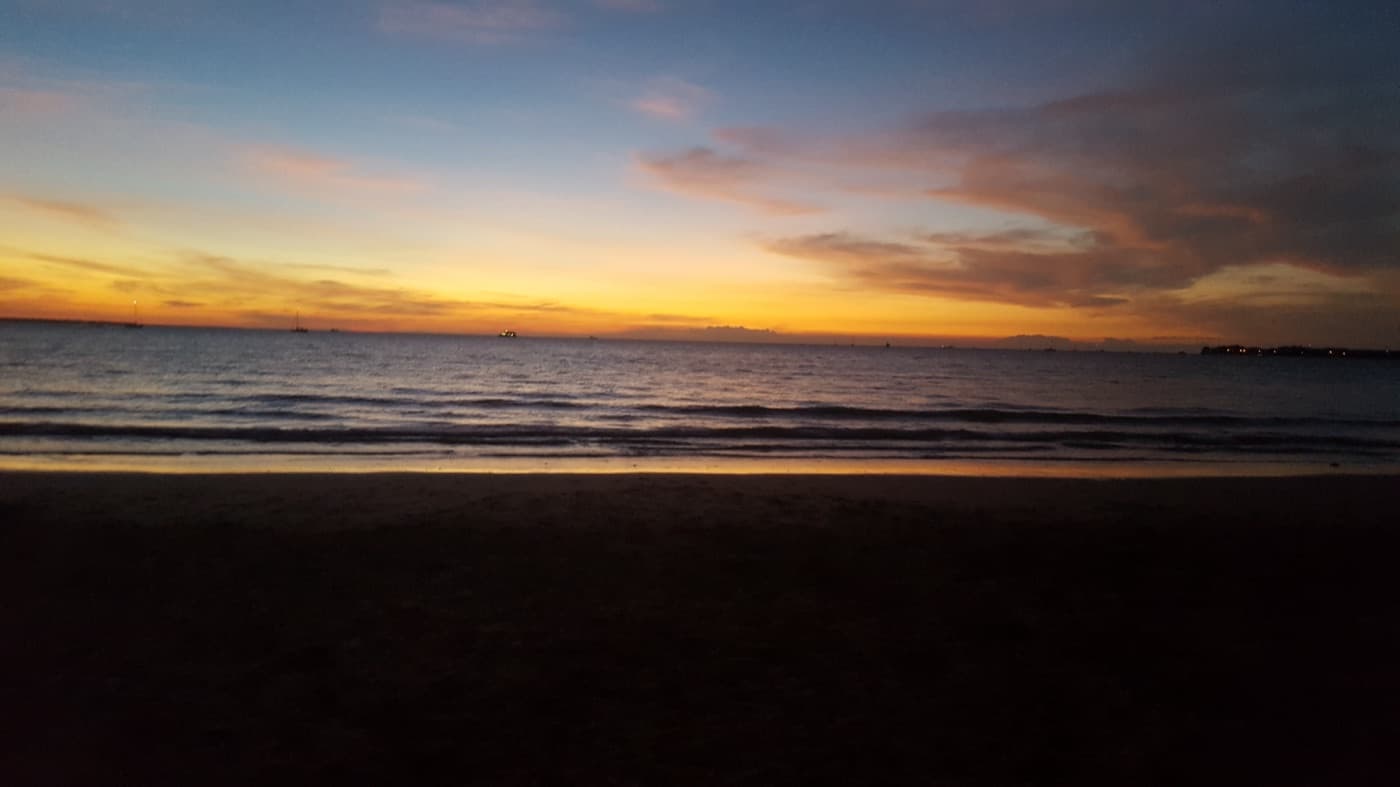
The Waterfront is the easy one — walkable from the CBD, lagoon, food, somewhere to sit that is not Mitchell Street. Mindil Beach at sunset is the postcard move in the Dry; the famous markets are seasonal, not a Tuesday-in-February fixture. Parap Markets on Saturday is the one locals actually use for food. When the humidity wins, the museums are not a consolation prize — they are air-conditioning with a point.
A proper day off: Litchfield
This is the Darwin worker's day trip. About 1.5 hours south. Florence Falls, Buley Rockhole, Wangi Falls — swimming holes you will actually use, not look at through a bus window. A car makes it simple. A tour works if you do not have one. Hitching it with no plan and no water is how a day off turns into a bad story.
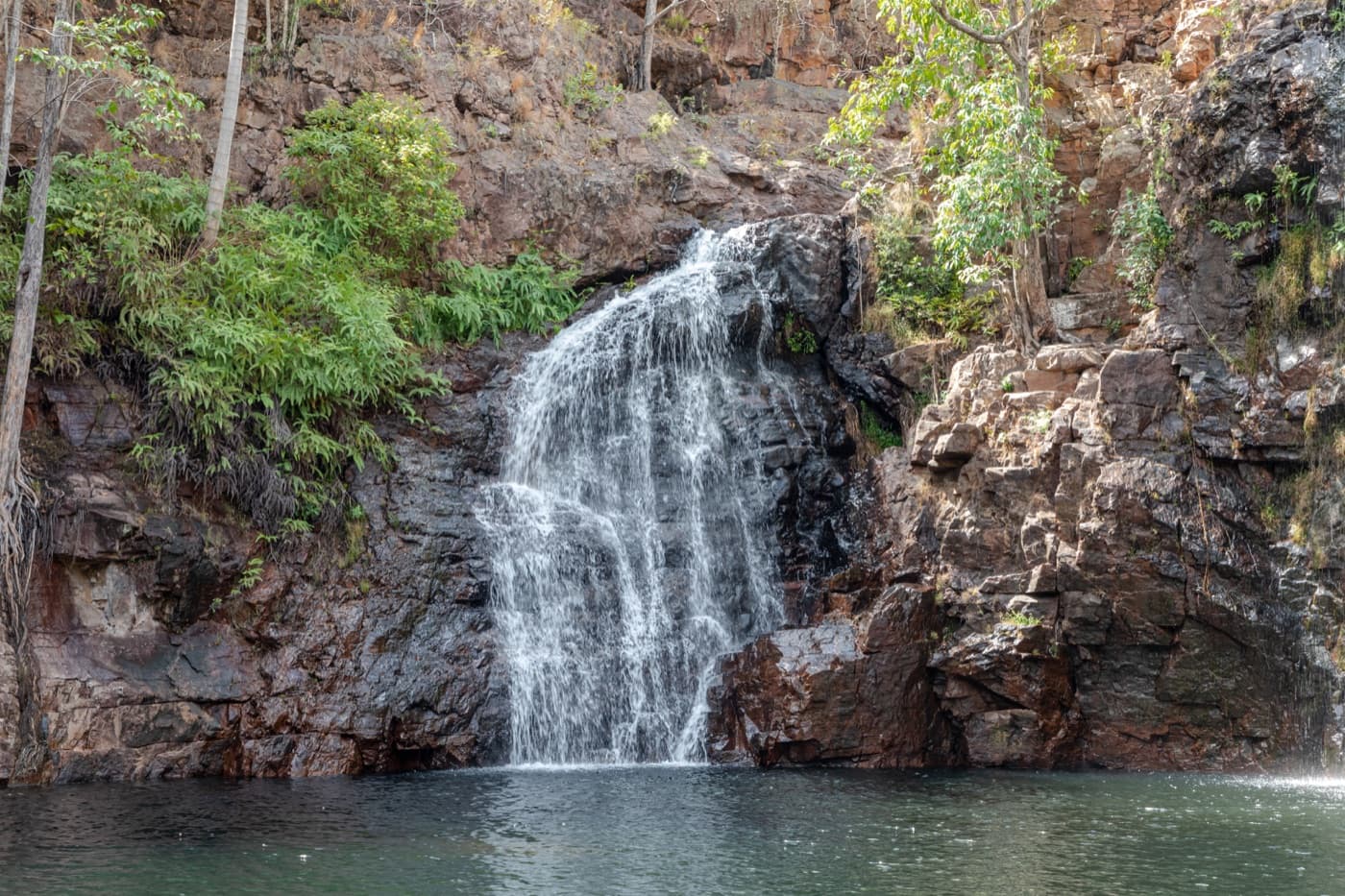
Berry Springs is closer if you only have a few hours. Still needs transport. Still better than spending the whole day in the hostel kitchen.
The bigger trip: Kakadu
Kakadu is why people stay in the Top End — and why they get it wrong. Tourism NT puts it around 250 km / about 3 hours from Darwin to the Jabiru side. That is not an afternoon. Do it as a long day with a tour, or better, an overnight. In the Wet, some roads and sites close. In the Dry, everyone else had the same idea, so book.
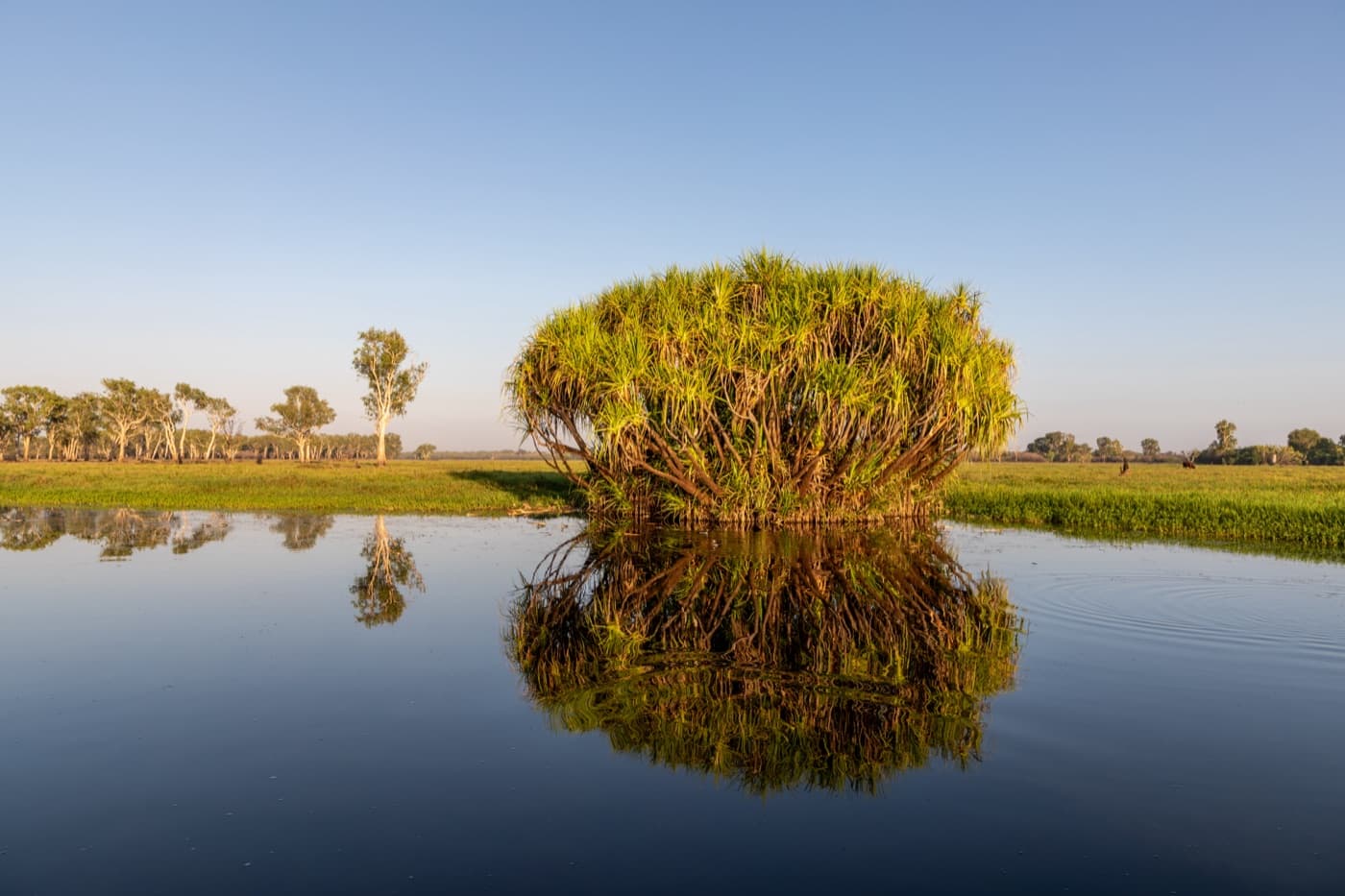
Harbour cruises and fishing trips are the other "I actually live here" option. Go with an operator. This is crocodile country. Follow local advice about where you swim — a pretty beach is not automatically a swimming beach.
None of this is the reason to come. The job is. But if you are going to work in Darwin for a few months, these days off are the difference between enduring the humidity and actually liking the place.
The downside: Darwin isn't for everyone
- Humidity and the Wet / build-up are hard if you have only lived in southern cities.
- It is a long, often expensive trip from the east coast or Perth.
- The employment market is smaller than Sydney, Melbourne or Brisbane. One quiet month feels bigger here.
- Accommodation pressure in the Dry is real — especially hostel beds.
- Some jobs need transport that a CBD hostel will not solve.
- Seasonal competition: you will not be the only traveller who timed the Dry.
- Many of the most distinctive NT opportunities are remote. Darwin is the gateway, not the whole Territory.
Before moving to Darwin, ask:
- When does the job start?
- How many hours are available?
- What is the hourly rate?
- Which Award / classification applies?
- Where exactly is the workplace?
- Do I need my own car?
- Is accommodation provided?
- Is transport provided?
- How long is the role expected to last?
- What certificates do I need?
- If I am completing specified work, does my actual job qualify?
Our verdict: is Darwin good for backpackers?
We like Darwin for backpackers who want a Top End base and are willing to hunt for the work. We would not send someone here as a panic 88-day solution, or as a substitute for Brisbane when they have not checked a single vacancy.
Why we like it
- Work is not limited to one industry: hospitality, hotels, tourism, construction, logistics and cleaning all exist.
- It is a genuine gateway to broader NT opportunities.
- The lifestyle is distinctive if you stay long enough to live it, not just pass through.
- Remote and regional work is more accessible from here than from Melbourne.
The negatives
- Remote from other major Australian cities, and often expensive to reach.
- Smaller job market than the big capitals.
- Climate can be challenging outside the Dry.
- Some of the better-paid or more distinctive roles need transport or a move out of town.
Darwin backpacker snapshot
| Location | Top End, Northern Territory |
| Main work | Hospitality, tourism, hotels, construction, logistics, cleaning |
| Best known season | Dry season (roughly May–October) |
| Car recommended? | Depends on the role — CBD hospo less so; industrial and remote yes |
| Remote work access | Strong — Darwin is a staging point, not the whole NT |
| Backpacker scene | Established, especially Mitchell Street in the Dry |
| 88-day potential | Depends on actual role, visa subclass and current Home Affairs rules |
| Best for | Backpackers who want work plus a Top End base — after checking vacancies |
Explore more Northern Territory work destinations
Guides for Katherine, Alice Springs, Yulara / Uluru, Tennant Creek and Kakadu / Jabiru will sit here when they are published. Until then, search NT jobs by the actual town — not every "Northern Territory" listing is in Darwin.
Seasonal dates, job availability, visa rules and accommodation change. Verify current conditions, Awards and Home Affairs specified-work criteria before travelling or relying on a role for visa eligibility.