
Kangaroo Island: Australia's Wildlife Island — Backpacker Guide
G'Day Backpacker Jobs
Published 20 July 2026 · Updated 28 July 2026
What makes Kangaroo Island worth the effort
Kangaroo Island sits 13 kilometres off the Fleurieu Peninsula in South Australia, and it does something unusual for a well-known Australian tourist destination — it almost always exceeds expectations. The island lost a significant portion of its vegetation in the catastrophic fires of January 2020, and the recovery since then has been one of the more remarkable natural stories in recent Australian history. The wildlife wasn't deterred for long.
For backpackers on a Working Holiday Visa, KI comes up most often as a side trip from Adelaide — usually after completing farm or harvest work in the Riverland or Clare Valley regions, which sit within the regional work zones that count toward 88 days. The island itself has limited work opportunities, but the broader South Australian agricultural sector is one of the more reliable for visa holders, particularly for grape harvest (February–April) and apple picking (March–May).
Getting there
The standard route is the SeaLink ferry from Cape Jervis, about 90 minutes south of Adelaide by car or bus. The crossing takes 45 minutes. SeaLink runs a direct coach from Adelaide city to Cape Jervis that connects with ferry departures — it's the only realistic option without a car, and it works fine. Return passenger fares run around $85–95.
The significant caveat: Kangaroo Island is large (145 km end to end) and has no public transport. Without a car, you're dependent on tours from Penneshaw or Kingscote, bicycle hire for the immediate vicinity, or hitching. Most backpackers either rent a car as a group, join a package tour, or do a day trip.
Seal Bay
Seal Bay Conservation Park is the main reason to come to the southern coast. It's a guided-tour experience that takes you down to a beach where Australian sea lions haul out, sleep, squabble and occasionally lumber into the shallows. The guided tour gets you closer than the self-guided boardwalk allows. Females will occasionally approach within touching distance — don't touch them.
These are not performing animals. They're not fed. They're not herded. They live their lives on this beach and you get to walk among them for 45 minutes. It costs around $40 for the guided experience and genuinely delivers.
The Remarkable Rocks and Admirals Arch
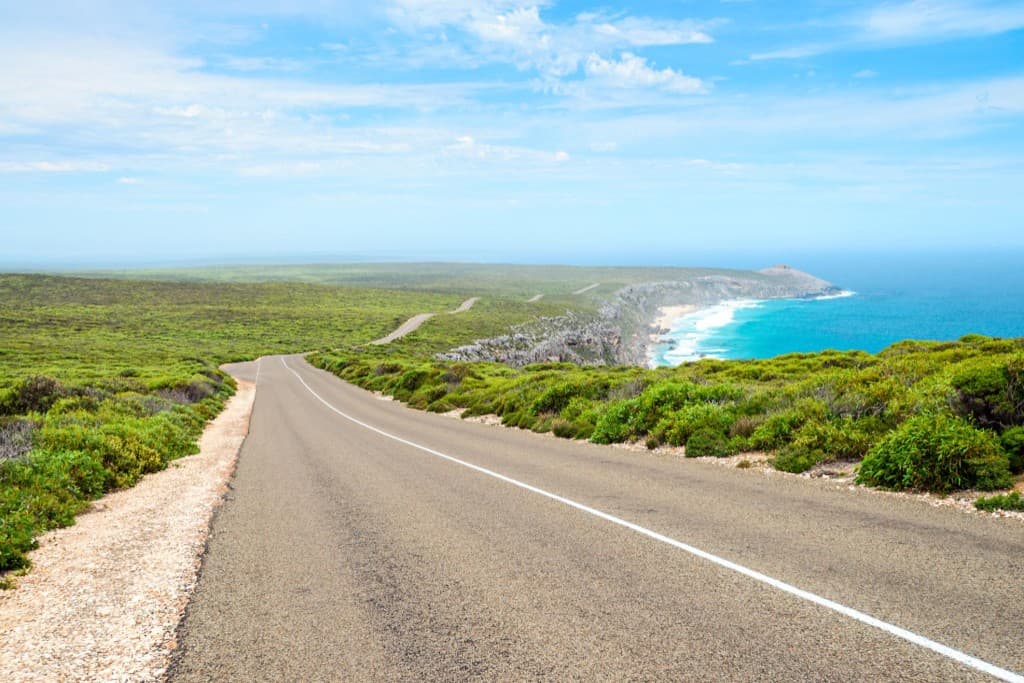
The western end of the island — Flinders Chase National Park — burned severely in 2019–20 but has recovered significantly. The Remarkable Rocks are enormous granite boulders perched on a coastal headland, shaped by millions of years of wind into forms that look deliberately placed. They sit above a sheer drop to the Southern Ocean. At sunrise or sunset the light on them is extraordinary.
Admirals Arch, a few kilometres away, is a natural rock arch at sea level with a colony of New Zealand fur seals. You can walk to within a few metres of them. They smell, and they're chaotic, and they're wonderful.
The wildlife everywhere else
The island's common name isn't coincidental. Kangaroos are genuinely abundant — most properties and roadsides have them at dusk. Koalas were introduced in the 1920s and have thrived; they can be found dozing in manna gum trees throughout the conservation parks. Echidnas turn up on walking tracks regularly enough to stop surprising you.
This abundance is partly the result of the island's isolation — naturally predator-free, no foxes or rabbits established — and partly the legacy of long-term conservation management. The 2020 fires were devastating but the fauna has proven more resilient than feared.
Practical notes
Penneshaw (where the ferry arrives) is the east-coast town. Kingscote, 40 minutes west, is the main commercial centre with supermarkets and the largest hostel accommodation. Budget around $80–100 per day for accommodation, food and basic activities, plus transport costs. A two-day visit is the minimum to see the main sites; three days is more comfortable.
The island's food and wine sector — honey, olive oil, wine, free-range meat — employs locally through harvest season. It won't count for 88-day purposes in most cases, but the broader SA region gives you options to extend your time in the state.